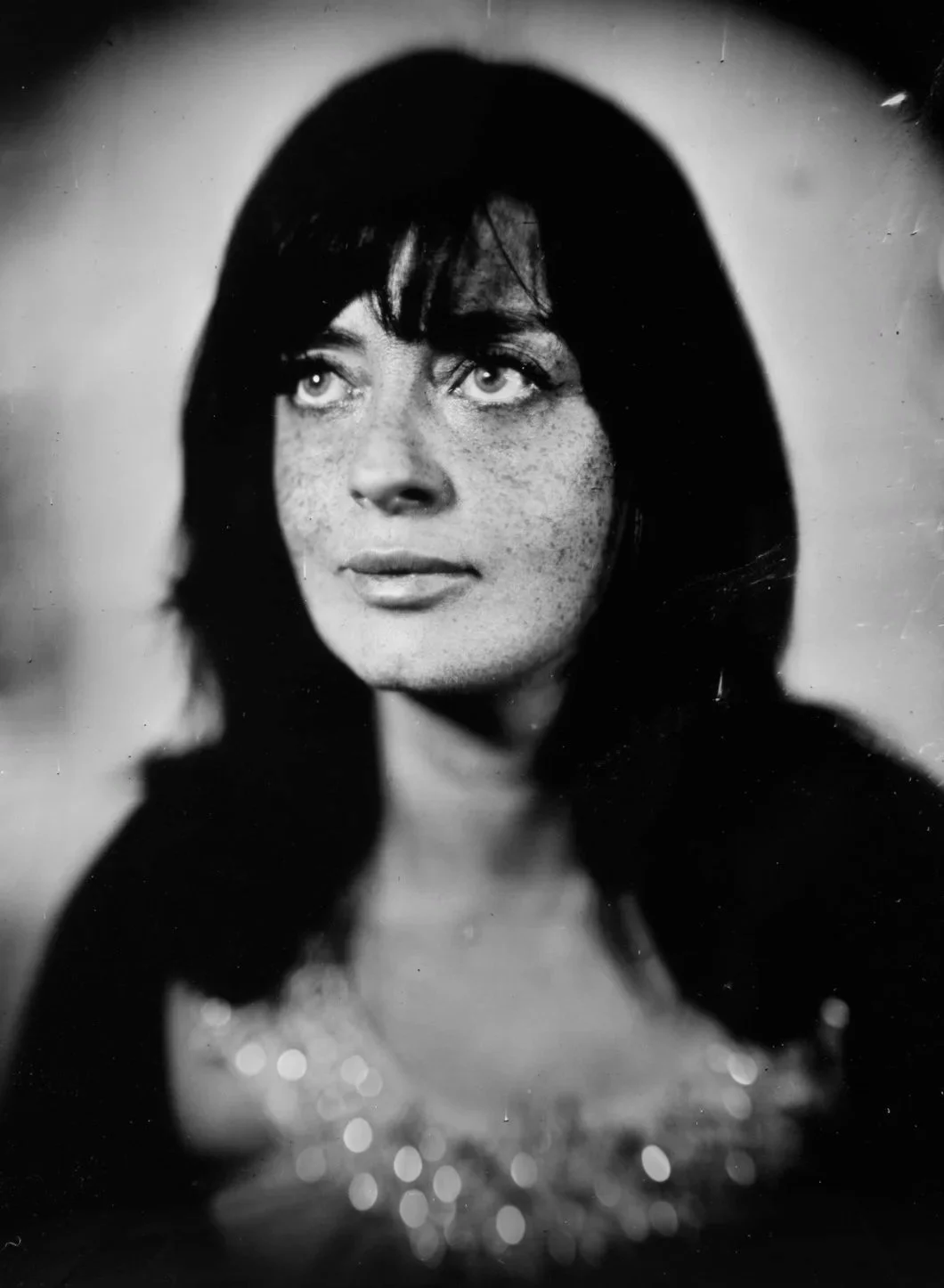
Hi, I’m Corrine. I’m a photographer, researcher and educator from the UK, based in Germany.
I’ve been making photographs for many years, but I’ve never been particularly interested in photography being perfect. I’m much more interested in what happens when we experiment, make mistakes, try processes we can’t completely control, and occasionally end up somewhere we didn’t expect.
That curiosity has taken me through all kinds of analogue and experimental processes, from film photography and film soup to Polaroid emulsion lifts and wet plate collodion. More recently, it has even taken me away from photography altogether and into other practices.
I’m currently completing a practice-based PhD at the University of Northampton, where I’m researching something I’ve been fascinated by for a long time: unusual and unexplained human experiences.
In particular, I’m interested in experiences people might describe as ghostly or paranormal. I’m not trying to prove whether ghosts exist. Instead, I’m interested in the person behind the experience. What did it feel like? What do they remember? How do you communicate something that might have been heard, sensed or felt rather than actually seen?
And, as a photographer, that leaves me with a question I keep coming back to:
How do you photograph something you can’t see?
My research has led me to experiment with photography, drawing and photo elicitation, and to question what photography can, and sometimes can’t, communicate.
Teaching has also been a big part of my photographic life. I’ve worked as an Associate Lecturer at the University of Northampton, taught photography workshops and spoken about my work at The Photography Show in London and Birmingham and had my work presented at the Society for Psychical Research.
I’m also increasingly interested in how we can make photography feel more accessible. As a neurodivergent photographer, I know that creativity doesn’t always happen in a neat or predictable way. Sometimes I can completely disappear into an idea; at other times, even picking up a camera can feel like a lot.
That experience is beginning to shape another part of my work, exploring photography, neurodivergence, overwhelm, and how we might learn and create without putting quite so much pressure on ourselves.
Dark Art Sessions is now a home for all of those things: my photographs, experiments, research, ideas, and the occasional thing that goes completely wrong.
I’m still figuring things out – and I think that’s probably the most interesting part.
Progress Rooted in Principle
We begin every engagement by listening, ensuring that objectives align with broader civic, environmental, and fiscal contexts.
Analytical models then quantify potential scenarios, allowing decision makers to compare paths with clarity.